

Why Every Veterinary Practice Should Stock Joint Supplements
Helping pets stay active through earlier intervention, trusted recommendations and convenient access to mobility support
Discover why joint supplements should be part of every veterinary practice. Learn how early mobility support, trusted recommendations and convenient access can help improve joint health and keep dogs and cats active for longer.

Everything Your Practice Needs in One Place
Explore practical mobility resources, downloadable veterinary and pet owner guides, Cartimax® product information and support for introducing joint-health conversations into everyday practice.
Explore the Veterinary Mobility Resource CentreWhy Mobility Conversations Matter
Joint disease is one of the most common long-term challenges seen in companion animals, but the first signs are not always obvious. In dogs, owners may notice reluctance to jump into the car, stiffness after rest, shorter walks or less enthusiasm for play.
In cats, mobility changes are frequently behavioural. A cat may begin jumping onto lower surfaces, sleep more, groom less effectively, avoid stairs or become quieter and less interactive. These subtle changes can provide an important opportunity for the veterinary team to intervene earlier.
Joint Support Should Form Part of a Wider Mobility Plan
Joint supplements are not intended to replace veterinary assessment, prescribed pain relief or other treatment where these are needed. Their value is greatest when they form part of an individualised, multimodal approach that may also include:
- Weight optimisation and body-condition management
- Regular, appropriate physical activity
- Physiotherapy, hydrotherapy or other adjunctive support
- Environmental adaptations at home
- Ongoing clinical review
Why Keep Joint Supplements in the Practice?
There is an important difference between advising an owner to “look for a joint supplement” and being able to recommend and supply an appropriate product immediately.
Free Mobility Resources for Your Practice and Pet Owners
Visual resources can help make mobility conversations easier, support owner understanding and provide practical information to take home after the consultation.
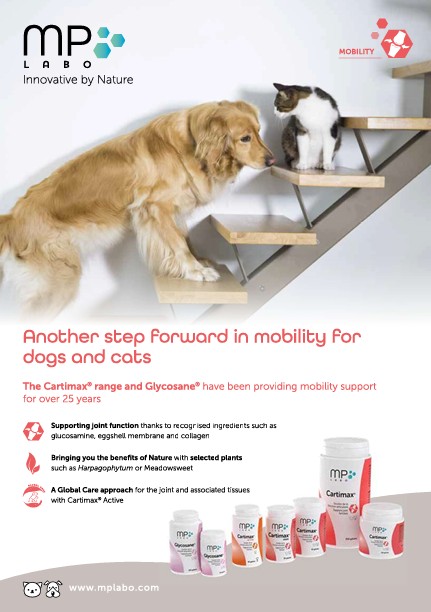
Veterinary Mobility Brochure
An overview of the Cartimax® mobility range and practical joint-support options for veterinary practice.

My Dog's Mobility
An owner-friendly guide to recognising changes and supporting mobility through weight, exercise and veterinary advice.

My Cat's Mobility
A practical owner guide explaining the behavioural and lifestyle changes that may indicate reduced mobility in cats.

Cartimax®: Practical Joint Support for Dogs and Cats
Cartimax® is a complementary feed range developed to support joint well-being in dogs and cats. Its formulation combines recognised ingredients including glucosamine sulphate and MSM with Harpagophytum and meadowsweet.
- Suitable for dogs and cats
- Cartimax® Mini is adapted for cats and small dogs
- Capsules can be opened and mixed with food
- Available in flexible pack sizes, including a Clinical Pack
- Supports convenient dispensing and ongoing review in practice
Every Member of the Veterinary Team Can Start the Conversation
Mobility support does not need to begin only in the consulting room. Veterinary nurses, care assistants and reception teams often hear owners make comments such as “he's just slowing down”, “she doesn't jump anymore” or “he seems stiff in the mornings”.
These comments provide an opportunity to ask a few simple questions, recommend a mobility assessment and ensure owners know that changes in activity or behaviour should not automatically be dismissed as normal ageing.
Useful questions to ask
- Has your pet become slower getting up?
- Are they reluctant to jump or use stairs?
- Have their walks become shorter?
- Are they playing less?
- Has your cat changed where or how high they jump?
- Have you noticed changes in grooming or interaction?

